
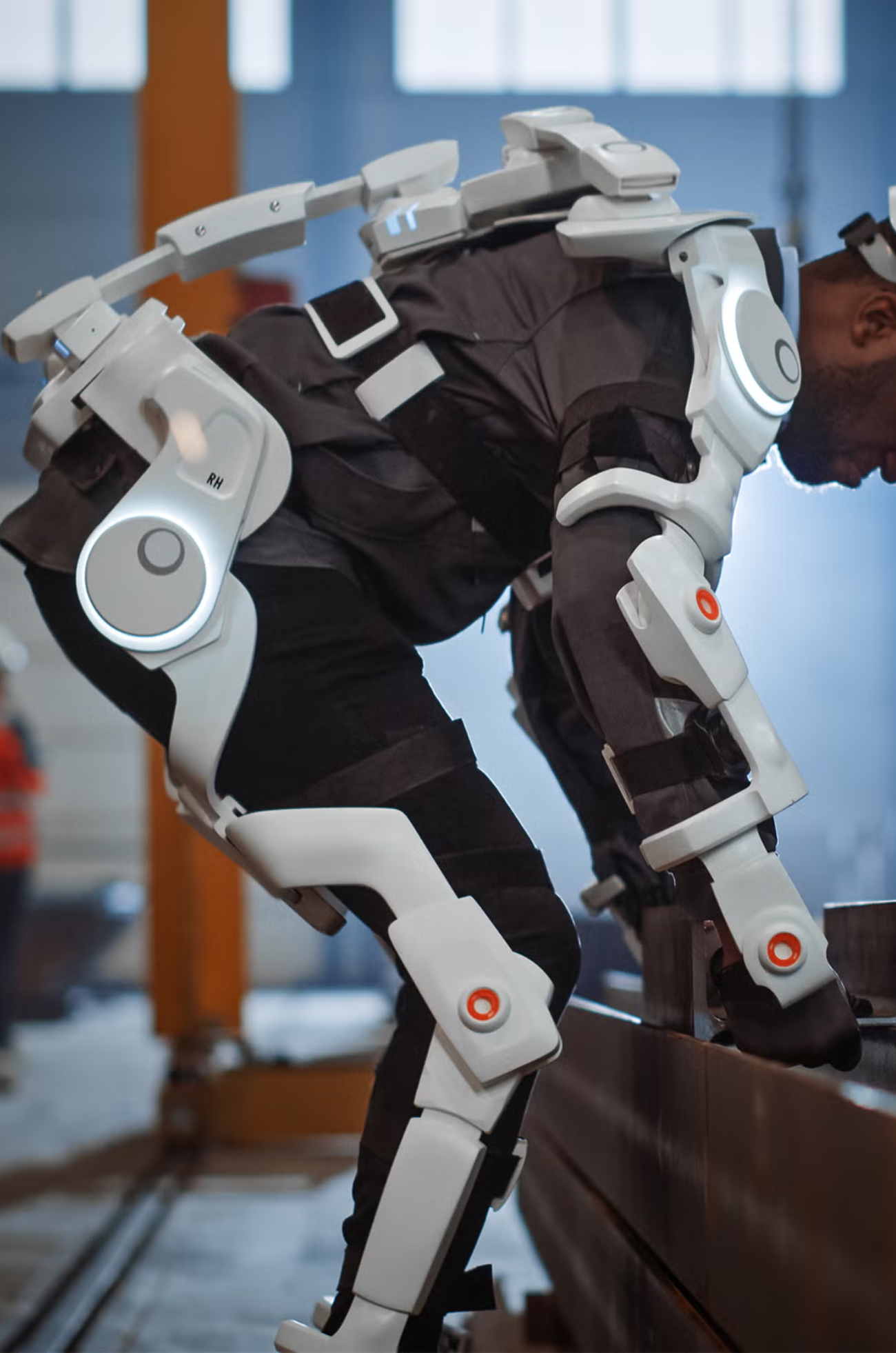
The Role of Biomechanics in Exoskeleton Design
Introduction
Exoskeleton technology has revolutionized the way humans interact with mobility assistance devices. At the heart of every advanced exoskeleton lies biomechanics—the study of how mechanical principles apply to biological systems. By understanding and leveraging biomechanics, engineers can design exoskeletons that seamlessly integrate with human movement, providing enhanced support, reduced strain, and improved functionality.
EXSLAB, a leading innovator in exoskeleton technology, applies cutting-edge biomechanical research to develop wearable solutions that optimize movement for both rehabilitation patients and workers facing daily physical challenges.
Understanding Biomechanics in Exoskeletons
Biomechanics is essential in the design of exoskeletons, as it focuses on how the body moves, absorbs forces, and interacts with external supports. Effective exoskeleton design requires a deep understanding of:
- Human Kinematics: The study of movement patterns, including joint angles, muscle activation, and gait cycles.
- Load Distribution: Ensuring that the exoskeleton transfers force efficiently to reduce strain on the user’s joints and muscles.
- Ergonomics: Creating designs that are comfortable, lightweight, and adaptable to different body types.
Enhancing Mobility Through Biomechanics
For rehabilitation users, such as elderly individuals or those recovering from injuries, an exoskeleton must replicate natural movement while providing additional stability. EXSLAB’s solutions use biomechanical modeling to:
- Improve balance and prevent falls by supporting proper weight distribution.
- Assist weakened muscles by complementing human effort with motorized or spring-assisted mechanisms.
- Reduce joint stress and enhance physical therapy outcomes by promoting correct movement patterns.
Biomechanical Considerations for Workplace Exoskeletons
For workers and office employees, biomechanics plays a crucial role in designing exoskeletons that prevent injuries and enhance efficiency. EXSLAB integrates biomechanical principles to:
- Reduce back and joint strain by redistributing weight more effectively.
- Support repetitive movements, minimizing fatigue and musculoskeletal disorders.
- Enhance productivity by maintaining proper posture and reducing excessive physical exertion.
Key Biomechanical Innovations in EXSLAB’s Exoskeletons
At EXSLAB, biomechanical research is a cornerstone of product development. Some of the latest innovations include:
- Adaptive Joint Mechanisms: Smart actuators that adjust support levels based on user movement and force exertion.
- Dynamic Load Redistribution: Systems that shift weight efficiently to minimize pressure on specific body parts.
- Real-time Motion Analysis: AI-powered sensors that monitor movement patterns and provide feedback for optimal performance.
The Future of Biomechanics in Exoskeleton Development
As biomechanics continues to evolve, exoskeletons will become even more intuitive and personalized. Future advancements may include:
- AI-driven models that predict user needs and adjust support automatically.
- Ultra-lightweight materials that enhance comfort without sacrificing strength.
- Customizable designs that adapt to individual biomechanics for maximum efficiency.
EXSLAB remains committed to pushing the boundaries of biomechanics in exoskeleton technology, ensuring that users experience superior mobility, reduced fatigue, and long-term health benefits.
Conclusion
Biomechanics is the foundation of effective exoskeleton design, ensuring that wearable solutions align with natural human movement while providing essential support. By integrating advanced biomechanical research, EXSLAB continues to develop innovative exoskeletons that improve rehabilitation outcomes and enhance workplace safety. As technology progresses, the fusion of biomechanics and exoskeletons will redefine human mobility, empowering users to move with greater ease and confidence.
Leave a Reply